- learnalquranofficial@gmail.com
- +447308243404


Difference Between Hajj and Umrah A Complete Islamic Guide
- Home
- Featured Blog Posts
- Difference Between Hajj and Umrah A Complete Islamic Guide
- Featured Blog Posts, Hajj, Hajj Guide, Pillars of Islam, Recent Updates, Umrah Guide
- By: anasaitzaz56@gmail.com
Among the greatest acts of worship in Islam are the pilgrimages of Hajj and Umrah. Both are journeys to the blessed city of Makkah, filled with worship, remembrance, and spiritual renewal. Yet, they differ in purpose, timing, and obligation each carrying its own reward and meaning.
The difference between Hajj and Umrah goes far beyond their rituals. For Muslims around the world, these journeys reflect the balance between duty and devotion. Hajj is a sacred duty. It must be performed once in a lifetime by those who are able. Umrah, on the other hand, is a voluntary journey of love. It brings humility and closeness to Allah and can be performed at any time of the year. Together, they strengthen faith, bring unity to the Ummah, and remind believers of their submission to Allah (SWT).
Each pilgrimage carries its own purpose, yet both lead to the same goal renewal of faith. By understanding their differences, believers feel more connected to the purpose of worship. It helps them see the mercy and wisdom that shine through every act in Islam.
Understanding the Difference Between Hajj and Umrah
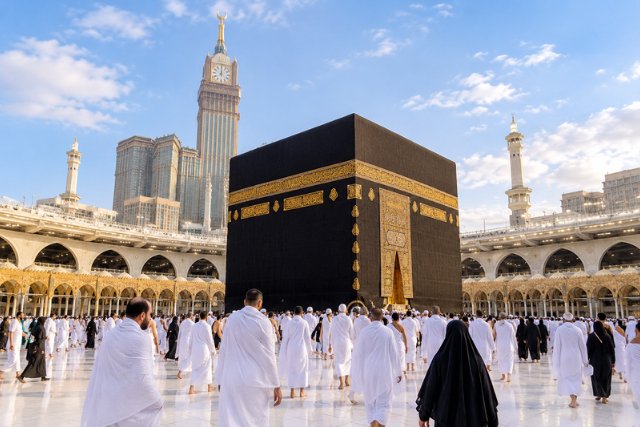
Muslims perform Hajj and Umrah at the holy Kaaba in Makkah, yet the two journeys differ in their purpose, timing, and spiritual obligation.
Hajj is required for Muslims who are physically and financially able, while Umrah is encouraged as a noble voluntary act of devotion. Both involve entering the state of Ihram, performing Tawaf around the Kaaba, and walking between Safa and Marwah, but Hajj includes additional rituals performed at Mina, Arafat, and Muzdalifah.
Understanding these distinctions helps Muslims prepare mentally, spiritually, and physically for whichever pilgrimage they are blessed to perform.
What Is Hajj in Islam
Hajj is one of the Five Pillars of Islam and represents the highest form of physical and spiritual devotion a Muslim can perform. It is an obligatory pilgrimage that every adult Muslim must undertake at least once in their lifetime, provided they are financially and physically able to do so.
Hajj takes place annually during the Islamic month of Dhul-Hijjah, specifically from the 8th to the 12th day of the month. Every year, believers from across the world travel to Makkah for Hajj, answering Allah’s call. In that crowd of millions, titles fade, hearts soften, and everyone stands equal before their Creator.
The Qur’an states:
And proclaim to the people the Hajj; they will come to you on foot and on every lean camel; they will come from every distant pass. (Surah Al-Hajj 22:27)
Hajj purifies the believer’s soul and wipes away sins. It is not just a journey to a holy city — it is a journey of the heart, teaching patience, sacrifice, and complete submission to Allah’s will.
Hajj Rituals
To understand the difference between Hajj and Umrah, it’s important to first know the rituals that make Hajj unique. Each step carries a deep spiritual message and connects the believer to the history of Prophet Ibrahim (AS), Hajar (RA), and Prophet Muhammad (PBUH).
- IhramPilgrims enter a state of spiritual purity by wearing simple white garments. It symbolizes equality and humility, removing distinctions of wealth and status.
- Tawaf al-Qudum (Arrival Tawaf)
Upon reaching the Sacred Mosque, pilgrims circle the Kaaba seven times in a counter-clockwise direction, expressing love and devotion to Allah. - Sa’i between Safa and Marwah
Pilgrims walk seven times between the hills of Safa and Marwah, retracing the steps of Hajar (RA) when she searched for water for her son Isma’il (AS). This act teaches trust in Allah even in moments of hardship. - Wuquf at Arafat (Standing at Arafah)
The heart of Hajj. Pilgrims stand in prayer and reflection at the plain of Arafat, asking Allah for forgiveness and mercy. The Prophet (PBUH) said, “Hajj is Arafah.” - Muzdalifah
After sunset, pilgrims travel to Muzdalifah, pray, and collect small stones to use the next day. It is a moment of simplicity and unity under the open sky. - Rami al-Jamarat (Stoning the Pillars)
At Mina, pilgrims cast pebbles at three symbolic pillars. The act represents rejecting Shaytan’s whispers and choosing steadfast faith over sin. - Qurbani (Sacrifice)
An animal sacrifice is made to honor Prophet Ibrahim’s willingness to obey Allah. The meat is shared with the poor and needy. - Tawaf al-Ifadah and Farewell Tawaf
Before leaving Makkah, pilgrims complete a final Tawaf around the Kaaba, expressing gratitude and closure to their sacred journey.
Every part of Hajj teaches humility and surrender, showing the believer’s willingness to sacrifice comfort and desire purely for Allah’s sake. It renews the soul and strengthens the bond between the servant and the Creator.
What Is Umrah in Islam
While Hajj is performed only once a year, Umrah can be performed at any time. It is often called the “lesser pilgrimage” but carries immense spiritual value. Although Umrah isn’t required, it remains a beloved act of worship. It softens the believer’s heart and renews faith, gently bringing them closer to Allah (SWT).
The word Umrah in Arabic simply means “to visit.” Where Hajj recalls the great sacrifice of Prophet Ibrahim (AS), Umrah reflects a quieter form of devotion—a personal moment of cleansing and gratitude. It allows Muslims to experience the sacred atmosphere of Makkah even outside the Hajj season.
The Prophet Muhammad (PBUH) said:
When a believer performs Umrah, it wipes away sins committed until the next one, and an accepted Hajj leads to Paradise. (Sahih al-Bukhari)
With a sincere heart, performing Umrah feels like a fresh start. It clears past mistakes and fills the soul with peace, remembrance, and thankfulness toward Allah. It is a chance to reset one’s spiritual direction — a journey that strengthens the bond between the servant and the Creator.
Umrah Rituals
Though Umrah is smaller in scale than Hajj, it carries a rhythm of worship that draws the pilgrim inward. Each moment—every prayer, every step—invites humility, gratitude, and closeness to Allah (SWT). Understanding these Umrah rituals helps pilgrims perform them with mindfulness and devotion.
Ihram (Entering the State of Purity)
Pilgrims begin by entering a sacred state known as Ihram. Men wear two simple white sheets, while women dress modestly in plain clothing. During Ihram, Muslims avoid arguments, vanity, and worldly distractions. They recite the Talbiyah — “Labbayk Allahumma Labbayk” — proclaiming their readiness to obey Allah’s call.
Tawaf (Circling the Kaaba)
When pilgrims enter Masjid al-Haram Inside Masjid al-Haram, pilgrims walk seven times around the Kaaba, their hearts calm and focused on the remembrance of Allah (SWT). Each round carries a silent prayer, a personal moment between the believer and the Creator. Each step reminds a Muslim that everything in creation follows Allah’s will. In that shared movement of worship, hearts find connection and peace before their Creator.
Sa’i between Safa and Marwah
After Tawaf, pilgrims walk seven times between the two hills of Safa and Marwah, just as Hajar (RA) did in her search for water for her infant son, Isma’il (AS). This moment reminds believers that trust in Allah brings miracles, even in times of struggle.
Halq or Taqsir (Shaving or Trimming Hair)
When Umrah comes to an end, men shave their heads while women trim a small part of their hair. The act marks completion and renewal, showing humility before Allah and a willingness to leave behind pride. In that moment, it feels like a new beginning. After completing Umrah, the pilgrim goes back home with quiet peace. There’s a sense of relief and thankfulness to Allah, knowing they were given another chance to do better.
Spiritual Reflection:
Every ritual in Umrah carries meaning beyond physical movement. Ihram strips away social differences; Tawaf teaches unity; Sa’i embodies patience; and Halq or Taqsir reminds Muslims to submit humbly to Allah’s will.
When performed with sincerity, Umrah transforms the heart — making the believer more compassionate, mindful, and thankful.
Common Mistakes to Avoid During Hajj and Umrah
Even with sincere intentions, many pilgrims make small mistakes that reduce the spiritual impact of their journey. Awareness of these helps ensure your worship remains pure and accepted by Allah (SWT).
- Rushing Through the Rituals Some pilgrims perform the rites too quickly without reflection. Each act — from Tawaf to Sa’i — should be done calmly, with understanding and focus.
- Neglecting Proper Intention (Niyyah) The Prophet Muhammad (PBUH) reminded us that every action depends on intention. Before starting Hajj or Umrah, take a quiet moment to purify your Niyyah—doing it only for Allah’s sake, not for recognition or praise.
- Excessive Use of Phones or Cameras Capturing memories is fine, but constant photography distracts from dhikr and humility. These moments are meant for reflection, not display.
- Arguing or Losing Patience Crowds and heat can test patience. Remember, Hajj and Umrah are lessons in self-control — raising one’s voice, arguing, or showing anger defeats that purpose.
- Ignoring the Rights of Others While performing Hajj or Umrah, it’s easy to forget the little manners. Some people might step ahead in a line or crowd without meaning harm. What matters is to slow down, notice others, and act with gentle respect. Showing patience in those moments is also part of kindness. Remember, every part of the journey teaches respect, patience, and care for fellow believers. Islam values courtesy and compassion in every step.
- Neglecting Knowledge Before the Journey Some travel without studying the correct rituals. Learning the steps in advance ensures confidence and sincerity in every act.
When pilgrims stay mindful and avoid these common mistakes, their Hajj and Umrah become more meaningful. Every step then carries sincerity, respect, and blessings that continue long after the journey ends.
Main Differences Between Hajj and Umrah
Hajj and Umrah share several sacred acts of worship, yet the difference between Hajj and Umrah lies in what each represents and when it is performed. Each carries its own purpose, timing, and spiritual depth in Islam. Understanding these differences helps every Muslim prepare with sincerity and true awareness of their faith.
|
Aspect |
Hajj |
Umrah |
|
Obligation |
Hajj is obligatory for every capable Muslim once in a lifetime. |
Umrah is voluntary and can be performed multiple times. |
|
Timing |
Can only be performed from 8th to 12th Dhul-Hijjah. |
Can be performed any time of the year. |
|
Duration |
Takes five to six days to complete. |
Can be completed in a few hours. |
|
Rituals |
Includes major rites such as Wuquf at Arafat, Mina, Muzdalifah, and Qurbani. |
Includes Ihram, Tawaf, Sa’i, and Halq or Taqsir only. |
|
Reward |
A completed Hajj brings forgiveness of all past sins. |
Umrah removes sins between one performance and the next. |
|
Obligation Level |
Fard (mandatory) for those who can afford it. |
Sunnah Mu’akkadah (highly recommended). |
Hajj is the greater pilgrimage, showing complete devotion and sacrifice to Allah. Umrah gives Muslims a chance to renew their faith and feel nearer to Allah whenever they choose to go. Through both journeys, a believer grows in gratitude and keeps their heart steady in devotion to the Creator.
Why the Difference Between Hajj and Umrah Matters
Truly understanding the difference between Hajj and Umrah helps Muslims not only perform each pilgrimage properly but also grasp the deeper wisdom and purpose behind them.
- Hajj teaches sacrifice, patience, and total submission to Allah. It reminds believers of the Day of Judgment and the equality of all humankind.
- Umrah, on the other hand, offers spiritual cleansing and renewal throughout the year. It gives Muslims the opportunity to recharge their faith whenever they can visit Makkah.
Both journeys nurture humility, compassion, and discipline — qualities that extend far beyond the pilgrimage itself.
In today’s busy world, Hajj and Umrah gently draw believers back to what truly matters — holding on to faith, showing gratitude in every moment, and remembering Allah with a sincere heart.
Physical and Emotional Benefits of Hajj and Umrah
The physical and emotional benefits of Hajj and Umrah extend far beyond the pilgrimage itself. Both journeys strengthen the body, calm the heart, and reshape the believer’s mindset — teaching endurance, gratitude, and emotional balance.
1. Physical Benefits — Building Strength and Endurance
Performing Hajj and Umrah requires real physical strength, as pilgrims walk long distances between the sacred places of Mina, Arafat, and the Kaaba, turning every step into part of their worship. This movement improves stamina, cardiovascular health, and overall body fitness.
As pilgrims move through the sacred journey, their bodies begin to adjust in remarkable ways. The long walks between the holy sites, the lighter meals, and the rhythm of worship help cleanse both body and mind. With fewer comforts and less rest, they slowly build endurance and patience.
Even the rituals themselves, such as Tawaf (circling the Kaaba) and Sa’i (walking between Safa and Marwah), engage the body in active worship. Every step taken for Allah becomes an act of devotion and a means to physical purification.
2. Emotional Benefits — Finding Peace and Connection
On an emotional level, Hajj and Umrah provide deep healing. The atmosphere of prayer, the sight of millions united in worship, and the rhythm of recitation calm the mind and reduce anxiety.
Standing in Arafat, for instance, fills the heart with humility — a reminder of human equality before Allah (SWT). Many pilgrims describe a feeling of emotional release, as tears flow freely and burdens feel lifted.
The sense of belonging during these journeys also removes loneliness and isolation. Whether traveling alone or with family, a pilgrim feels part of something greater — the global Muslim Ummah.
3. Long-Term Impact — A Renewed Way of Living
When a believer returns from pilgrimage, the effects remain long after. Many find renewed emotional clarity, stronger faith, and greater patience in daily challenges.
After the long walks and moments of prayer, pilgrims return home with a quiet strength. The body feels lighter, the heart calmer, and the mind more grateful for ordinary blessings.
Over time, Hajj and Umrah continue to shape a believer’s life — softening the heart, strengthening the will, and keeping Allah’s remembrance alive in everyday moments. This change doesn’t fade when the journey ends; it becomes part of how one lives and worships each day.
FAQs About Hajj and Umrah
1. How much does it cost to perform Hajj and Umrah?
The cost of Hajj and Umrah depends on factors such as travel country, package type, and accommodation. Hajj is more expensive due to its fixed dates and larger crowds, often ranging from economy to luxury packages. Umrah, being flexible, can be performed at a lower cost throughout the year.
2. Can a person perform Hajj and Umrah together in one journey?
Yes — this is called Hajj Tamattu‘. It means performing Umrah first during the months of Hajj, then performing Hajj in the same trip. It’s one of the three valid methods of performing pilgrimage and was also practiced by the Prophet Muhammad (PBUH).
3. What are the rules of Ihram for men and women?
For men, Ihram consists of two unstitched white cloths; for women, regular modest clothing that meets Islamic standards is acceptable. Both must avoid perfume, cutting nails or hair, and marital relations until the pilgrimage rites are complete. The goal is purity, equality, and focus on Allah.
4. Is vaccination required before performing Hajj or Umrah?
Yes. Health authorities in Saudi Arabia require vaccinations against meningitis and other regional diseases. Pilgrims are advised to check the latest Hajj and Umrah health guidelines well before traveling and carry proper documentation.
5. What is the significance of Zamzam water during pilgrimage?
Zamzam water, found in the Masjid al-Haram, holds deep spiritual importance. Drinking it symbolizes purity and faith, and it’s considered blessed. The Prophet (PBUH) said, “The water of Zamzam is for whatever it is drunk for.” Pilgrims often drink it and bring some home for blessings.
6. Can Hajj or Umrah be performed multiple times?
A Muslim is required to perform Hajj only once in a lifetime, as long as they have the ability and resources to do so. Yet, anyone who wishes may undertake it again for extra reward and devotion. Umrah, on the other hand, can be performed many times throughout the year, and every time it is done sincerely, Allah grants forgiveness and multiplies the reward.
7. What is the importance of intention (niyyah) before Hajj and Umrah?
The niyyah (intention) is what gives meaning to the pilgrimage. Without the correct intention, the act loses its spiritual value. Every pilgrim should begin by purifying their heart and setting their intention purely for Allah’s sake.
8. What should first-time pilgrims keep in mind before traveling?
For first-time pilgrims, the best preparation begins long before the journey itself. They can start by learning the main rituals early and keeping their travel papers safe in one place. More importantly, they must travel with hearts full of patience, kindness, and gratitude. The true spirit of pilgrimage appears through gentle manners, respect for others, and quiet humility at every step. It isn’t the count of rituals that makes a pilgrimage meaningful. What matters is how deeply its lessons shape a person’s heart and actions once they return home.
Conclusion — The Journey of Faith and Surrender
The difference between Hajj and Umrah is not measured by value but by how each shapes a Muslim’s journey of faith in its own way. Hajj tests obedience and unity, reminding Muslims of sacrifice and submission. Umrah, meanwhile, invites the heart to return to Allah again and again, renewing faith each time.
Both journeys teach that reaching Allah comes not only through words but through steady effort, patience, and humility. When performed sincerely, these sacred acts cleanse the heart and deepen one’s connection to the Creator.
The difference between Hajj and Umrah is not measured by value but by how each shapes a Muslim’s journey of faith in its own way. Ameen.
Copyright 2025. learnalquran. All Rights reserved.